ROKAE Company:
The story of the team that started it all
ROKAE Robotics was founded in 2015. However, the formulation “a technology startup founded in 2015” somewhat simplifies the company’s real story. Behind its founding stood a team of specialists who already had substantial experience in robotics by the time the company was established.
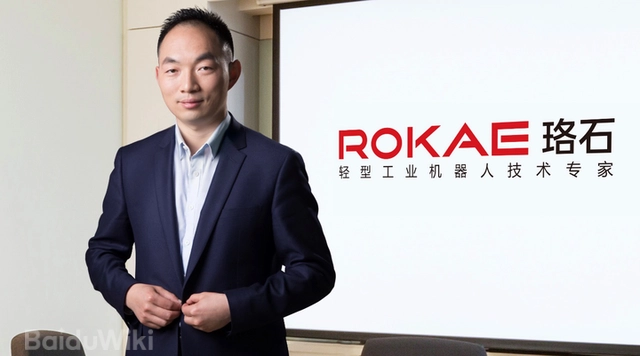
One of the key founders was Tuo Hua (庹华, Tuo Hua). He trained in engineering and management and completed internships and work placements with technology companies including Motorola, IBM, and the Sony Research Institute. After finishing his studies, Tuo Hua worked for a time at Ericsson, but in 2010 he left the telecommunications industry and moved into robotics.
After that he worked on robotics projects first in the private sector and later in the research division of a large state-owned corporation. It was during this period that he met the future co-founders of ROKAE — Cao Hua (曹华, Cao Hua) and Han Fengtao (韩峰涛, Han Fengtao). The founding team emerged not around an abstract business idea but from within the robotics industry itself. All three had hands-on experience building robotic systems and understood the limitations of the existing market. In 2015 they decided to start their own company.
Why light and flexible robots?
By the time ROKAE was founded, the industrial robotics market was already mature. Large manufacturers offered powerful and reliable industrial manipulators, especially for the automotive sector. However, that model had limitations.
A traditional industrial robot typically:
- is installed in a fixed position;
- operates inside a protected cell;
- follows a preprogrammed sequence;
- requires significant integration costs;
- is most efficient for large volumes of stable production.
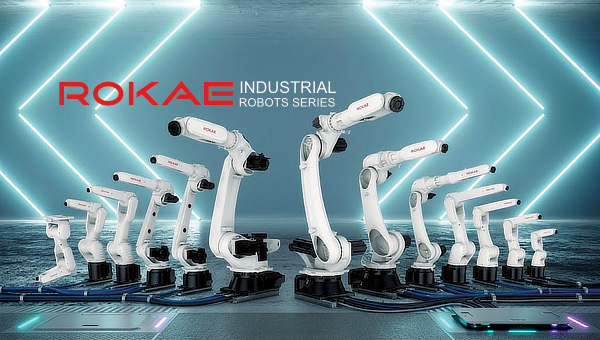
ROKAE’s founders chose a different direction. From the start, the company focused on creating lighter, more flexible, and smarter robotic systems capable of operating in more diverse manufacturing environments. From this grew ROKAE’s initial focus:
- lightweight industrial robots;
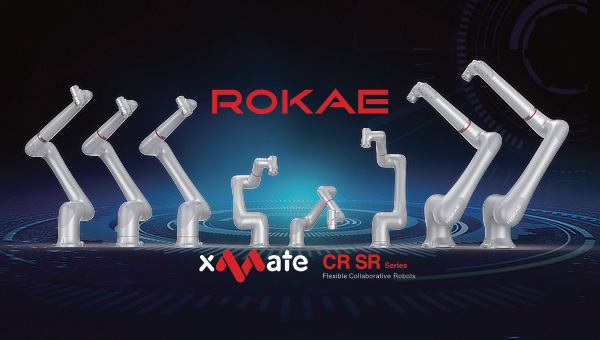
- collaborative robots (cobots);
- flexible automation;
- force-aware interaction;
- proprietary control systems.
This was an important strategic choice. ROKAE did not try to merely copy the classical architecture of heavy industrial robots. The company developed technologies intended to make robotics more adaptable and suitable for tasks where a rigid, preprogrammed trajectory is not enough.
From an engineering team to a technology company
ROKAE’s early years were dedicated to building its own technological base. The company steadily developed:
- robotic mechanics;
- actuation and drive systems;
- controllers;
- motion algorithms;
- force control;
- software;
- integration technologies for robotic systems.
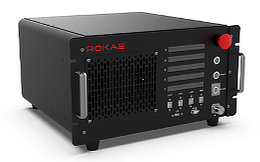
A key role was played by the proprietary control system xCore, which later became the technological foundation for various types of robotic platforms.
This direction proved strategically important. Creating an in-house controller and software architecture allowed the company not to be fully dependent on third-party solutions while enabling reuse of the same technology base across different robot classes. As a result, ROKAE began to evolve not as a maker of a single manipulator series but as a company building its own robotics platform.
First products and market entry
Initially the company developed industrial robots and lightweight robotic systems.
At the same time ROKAE invested in collaborative robotics — a field that in the mid-2010s was rapidly moving from research into real industrial applications. Unlike a traditional industrial robot, a collaborative system must consider not only position and velocity but also physical interaction with its environment. Therefore ROKAE placed significant emphasis on:
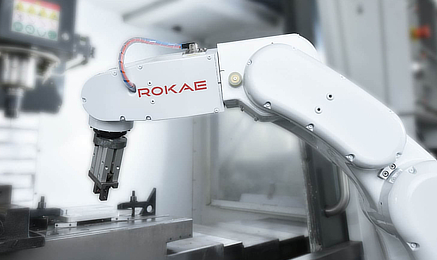
- force/torque sensing;
- contact detection;
- torque control;
- safe interaction;
- direct human teaching of the robot;
- motion adaptation to real-world conditions.
By the end of 2020, ROKAE’s collaborative robots had reached commercial production and serial manufacturing.
The company gradually expanded its presence across industries — from automotive and electronics to medical and specialized applications.
An important feature of the founding team
Perhaps the most significant detail of ROKAE’s early history is that the company was created by specialists who already understood the inner workings of the robotics market. This was not a story of entrepreneurs who first found a fast-growing market and then searched for a technology. For ROKAE the sequence was different:
engineering experience → understanding the limits of existing solutions → in-house technological development → company formation → product scaling.
That is why a strong engineering emphasis is visible in ROKAE’s development from the very beginning. The company developed not only end products but also the fundamental technological components on which those products are built. Later this allowed ROKAE to steadily expand its product line:
industrial robots → collaborative robots → mobile robotic systems → force-capable joint modules → humanoid robots.
From a light robot to physical artificial intelligence
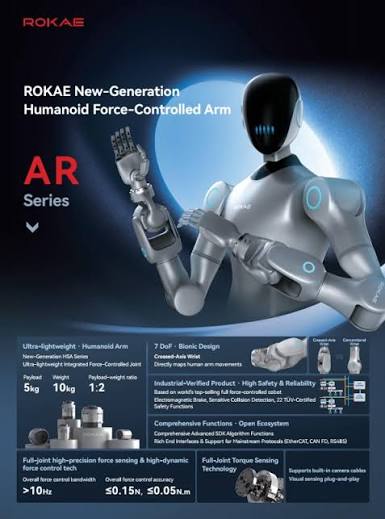
In this sense ROKAE’s current focus on embodied intelligence is not a sudden turn toward a fashionable technology. Its roots go back to the company’s original concept. If a robot must operate in more complex and less predictable environments, it needs:
- more accurate perception;
- force sensitivity;
- the ability to adapt motion;
- mobility;
- advanced control;
- a higher level of software intelligence.
As technologies evolved these requirements led ROKAE from lightweight and collaborative robots to mobile manipulators and then to humanoid systems.
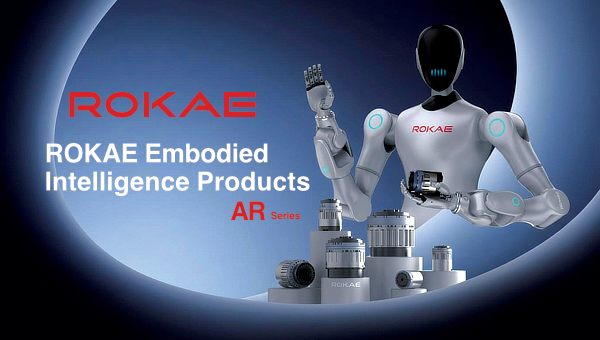
Today the company develops Human.X, 7-axis force-capable manipulators (AR Series), mobile two-armed robotic platforms, and its own force-capable joint modules. Thus, ROKAE’s path can be seen not as a set of independent product directions but as a sequential expansion of a single technological idea:
a robot should not only follow a programmed trajectory — it must perceive the physical world, interact with it, and adapt its behavior.
This idea connects ROKAE’s founding in 2015 with its present development toward embodied intelligence.